- Contact Us
- -
- Payment
- -
- 中文版
Knowledge Center · 2026-08-20 10:35:13 · 157 hits
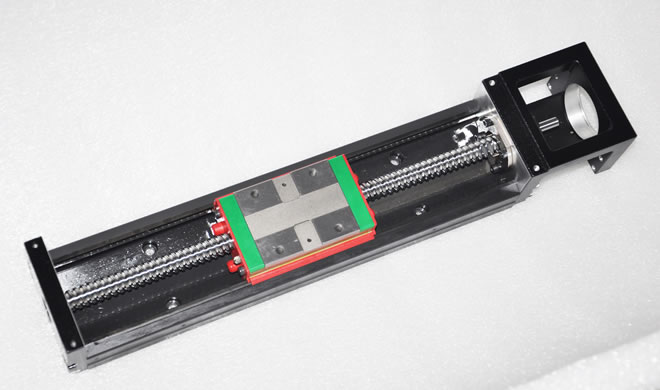
1. How to Select Linear Actuators According to Application Requirements
The core principle for linear‑module selection is not to pick the largest‑size model available, but to match appropriate structural forms and performance parameters against machine motion requirements. Requirements for Linear Actuators vary significantly across different operating scenarios. For instance, material‑handling mechanisms place high priority on load capacity and travel speed; precision assembly equipment focuses heavily on positioning accuracy and repeat positioning accuracy; high‑speed inspection machines demand a balance among speed, operational stability and dynamic response. Therefore, it is critical to clarify the exact motion tasks the module needs to perform first, before confirming proper specifications based on real‑world working conditions.
2. Impacts of Different Application Scenarios on Linear Actuator Selection
The intended function directly determines structural selection for Linear Actuators. When deployed for material handling, loading and unloading processes, modules are generally subject to heavy loads and require high travel speed. For such applications, overall rigidity, guiding performance and long‑term operational stability become key evaluation indicators. For precision positioning, inspection and assembly equipment, repeat positioning accuracy and motion smoothness should be emphasized. Even under light‑load conditions, excessive positioning errors can compromise processing quality and assembly consistency of finished products. For high‑speed reciprocating machinery, apart from maximum speed parameters, designers must evaluate acceleration performance, dynamic rigidity and vibration suppression. Insufficient handling of these factors will downgrade machine cycle time and positioning performance.
3. How Load Conditions Influence Linear Actuator Specification
Load constitutes one of the most fundamental criteria for linear‑module sizing. The actual applied load covers not only workpiece weight, but also fixture mass, mounting plate weight, plus inertial forces generated during acceleration and deceleration. Continuous operation beyond the module’s rated load will accelerate wear on linear guides, induce abnormal stress on ball screws or timing belts, and eventually result in motion stalling and positioning deviation. Furthermore, load orientation cannot be overlooked. Horizontal material transport and vertical lifting impose completely different demands on Linear Actuators. Vertical applications additionally require countermeasures against gravity‑driven falling during power‑off events. Consequently, selection should never rely merely on static maximum load rating; comprehensive assessment under real dynamic motion status is mandatory.
4. Selection between Screw‑Driven and Belt‑Driven Linear Actuators
Ball‑screw drive and timing‑belt drive represent two mainstream driving solutions for Linear Actuators, each optimized for distinct working scenarios. Screw‑driven modules deliver superior positioning accuracy and transmission rigidity, making them ideal for high‑precision applications including precision positioning stations, inspection machinery, dispensing equipment and assembly mechanisms. Timing‑belt driven modules feature higher permissible travel speed and support longer stroke ranges, well‑suited for material transfer, conveying tasks and high‑speed reciprocating motion. Screw‑type constructions are preferred when positioning accuracy is the primary target, whereas belt‑driven modules offer prominent advantages for high‑speed performance and long‑stroke efficiency.
FAQ
Q: Is a larger‑size Linear Actuator always better?
A: No. Over‑specified modules raise procurement cost and increase moving inertia, which may degrade dynamic response of the whole system. Specifications shall be determined according to practical load demands.
Q: What are the main differences between screw‑driven and belt‑driven Linear Actuators?
A: Screw‑driven modules provide high accuracy and rigidity for precision‑positioning tasks. Belt‑driven modules achieve higher speed and longer stroke, suited for high‑speed material‑handling applications.
Q: How should users calculate the actual load for Linear Actuators?
A: Calculation must integrate workpiece weight, fixture weight and inertial forces generated during motion, instead of static weight alone.
Q: Why does rigidity matter for high‑speed operation?
A: Structural vibration and elastic deformation under high‑speed movement will impair positioning accuracy and running stability.
Q: Do Linear Actuators require regular maintenance?
A: Yes. Periodic inspections on lubrication condition, wear status of transmission components and variation of motion accuracy are required, based on operating frequency and ambient environment.
Copyright © 2016-2025 Forrun (Guangdong) Industrial Technology Co., Ltd All Rights Reserved.


