- Contact Us
- -
- Payment
- -
- 中文版
Knowledge Center · 2026-11-16 09:37:51 · 24 hits
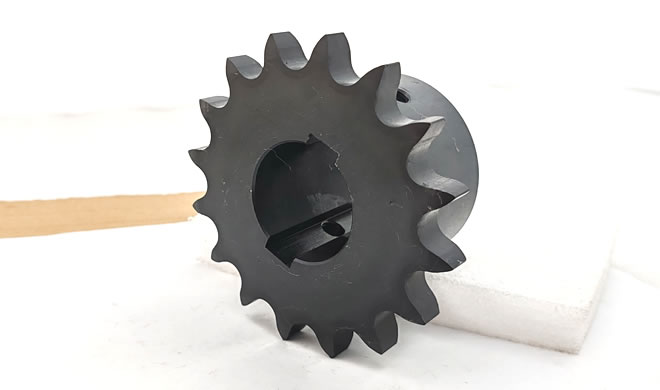
Sprockets and chains form one of the most common mechanical transmission structures, widely used in conveyor systems, bicycles, motorcycles, and industrial equipment. Correct installation directly affects the smooth running and service life of the entire system. A chain should maintain moderate tension with a certain degree of natural sag—neither over-tensioned nor too slack.
1. Basic Fit Requirements for Sprockets and Chains
The sprocket and chain work as a matched pair: the chain wraps the sprocket teeth and transmits motion through meshing rather than friction. Proper installation means the chain runs with appropriate slack so it can seat into the tooth profile smoothly while accommodating thermal expansion, load fluctuation, and elongation from wear. Over-tensioning is a frequent installation error that compromises both components instead of improving performance.
2. Main Effects of Over-Tight Chain Installation
2.1 Accelerated Chain Wear
When a chain operates under excessive tension, friction increases in the meshing zone between the rollers and the sprocket teeth. This accelerates wear of the links, pins, and bushings and significantly shortens service life. The increased contact pressure also raises the risk of surface fatigue and premature elongation.
2.2 Increased Sprocket Bearing Load
An over-tight chain transmits excessive pull to the sprocket shaft and bearings. The added radial and axial load can cause bearing overheating, deformation, or even premature failure, compromising the reliability of the entire drive system and often damaging shafts, keys, and housings in the process.
2.3 Higher Energy Consumption and Noise
A taut chain has greater running resistance and an elevated friction coefficient. This raises motor energy consumption and generates louder operating noise, degrading the equipment's working environment and increasing operating cost over time.
2.4 Tooth Skipping or Chain Jamming
When the chain is forced too tight, it cannot mesh perfectly with the sprocket, and the engagement geometry is disturbed. This may cause the chain to skip teeth, shift out of alignment, or even jam—conditions that worsen under high-speed operation or frequent start-stop cycles, where dynamic shock loads are highest.
2.5 Impaired Equipment Synchronization
In multi-sprocket or linked systems, an over-tight chain introduces uneven tension distribution and can cause desynchronization. This disrupts coordinated multi-axis motion and may trigger mechanical shock or accuracy errors, particularly where precise timing between driven elements is critical.
3. Correct Chain Tensioning Recommendations
Maintain proper sag: Allow a natural sag of approximately 10–15 mm for short-distance drives; verify against the equipment's specified tension range.
Use adjustment hardware: Employ a tensioner or adjustable idler pulley during installation to set and maintain the correct tension rather than forcing alignment by over-pulling the chain.
Inspect regularly: Check chain tension periodically; adjust or replace promptly if elongation, sticking, or abnormal noise is detected.
Support long or complex runs: For long-distance or complex-path drives, pair the chain with chain guides and a lubrication system to reduce wear, control vibration, and extend service life.
Copyright © 2016-2025 Forrun (Guangdong) Industrial Technology Co., Ltd All Rights Reserved.


