- Contact Us
- -
- Payment
- -
- 中文版
Knowledge Center · 2026-08-10 10:10:58 · 154 hits
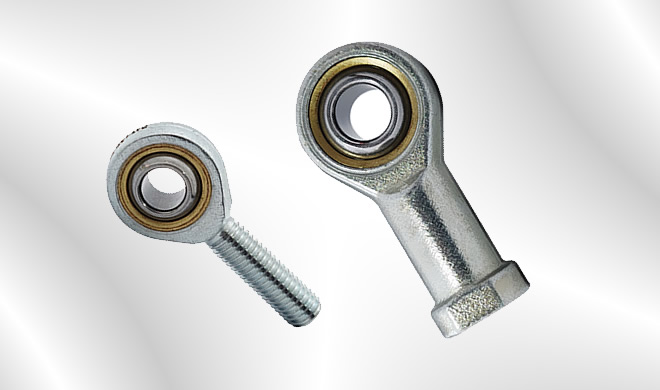
Key Maintenance Considerations for Spherical Plain Bearings
Spherical plain bearings differ from standard rolling bearings. They deliver relative motion via sliding contact or self‑lubricating materials between inner and outer rings, and are designed to accommodate oscillating loads within a defined angular range. Effective maintenance focuses on three core areas: sustaining proper lubrication, monitoring operating clearance, and eliminating abnormal loading conditions.
Operating under insufficient lubrication, heavy shock loads or offset loading for extended periods will trigger surface wear and gradually enlarge internal clearance. Visible symptoms such as stiff movement, abnormal noise, excessive clearance or positioning deviation of mechanical structures indicate abnormal internal wear, which calls for timely inspection.
How Lubrication Conditions Influence Spherical Plain Bearing Service Life
In grease‑lubricated or oil‑lubricated spherical plain bearings, lubricants separate metal contact surfaces, reduce friction and mitigate abrasive wear. Extended re‑lubrication intervals, dried‑out grease or contaminated lubricant will raise operating resistance and accelerate surface damage.
The re‑lubrication cycle shall be defined according to operating speed, applied load, oscillation frequency and ambient conditions. For high‑frequency oscillation or heavy‑duty working scenarios, shorten inspection and replenishment intervals.
Self‑lubricated spherical plain bearings do not require frequent lubricant refilling. Nevertheless, dust, debris and oil contamination penetrating the sliding contact area will degrade the performance of embedded self‑lubricating composites, so environmental protection should still be guaranteed.
How Installation Conditions Affect Bearing Service Life
Installation errors will subject spherical plain bearings to persistent abnormal loads. Misalignment, eccentricity or improper fitting clearance concentrates stress on partial contact zones and generates uneven wear on sliding surfaces.
Though spherical plain bearings can compensate for limited angular misalignment, continuous operation beyond allowable angular offset in linkages and oscillating mechanisms will still aggravate wear of inner and outer rings. During maintenance work, technicians shall inspect not only the bearing itself, but also check connected shafts, mounting housings and mating components for deformation and loose fasteners.
Judging When Spherical Plain Bearings Require Maintenance or Replacement
Operational symptoms offer intuitive diagnosis of bearing health. Obvious play, knocking noise or unstable oscillation usually stem from enlarged clearance caused by internal wear. Sharply increased motion resistance or mechanical sticking points point to lubrication starvation, foreign‑particle intrusion or damaged sliding surfaces.
For equipment subjected to impact loads, implement periodic visual inspections for cracks and deformation on inner rings, outer rings and joint interfaces to prevent unexpected catastrophic failure.
Procurement Recommendations
Selection of spherical plain bearings should not rely merely on overall dimensions and mounting bore size. Evaluate practical working conditions to confirm bearing type: load direction, allowable swing angle, oscillation frequency, lubrication mode and environmental requirements.
For applications with frequent oscillation, shock impact or heavy loads, prioritize models with high load capacity and outstanding wear resistance. Where on‑site maintenance access is limited, self‑lubricated variants are recommended to reduce routine servicing workload. Always verify bearing material, manufacturing tolerance and rated load limits; continuous operation beyond rated working conditions will drastically shorten service life.
Risks and Common Misconceptions
A widespread misconception assumes that the self‑aligning property of spherical plain bearings completely removes requirements for installation precision. In reality, self‑alignment only compensates minor angular deviations; severe assembly errors will still produce destructive abnormal stress.
Over‑lubrication is another frequent mistake. Excessive grease attracts particle contaminants and may impair the performance of self‑lubricating inserts.
Replacing only the worn bearing without inspecting adjacent mechanical assemblies is also risky. Defective shafts, deformed housing booms or distorted mounting structures will cause premature failure even for brand‑new replacement bearings.
FAQ
Do spherical plain bearings need regular grease replenishment?
It depends on bearing construction. Conventional lubrication‑type bearings require periodic re‑greasing. Self‑lubricated types normally need no extra lubricant, yet a clean operating environment remains essential.
What causes increased clearance in spherical plain bearings?
Major contributing factors include long‑term abrasive wear, overload operation, inadequate lubrication and repetitive impact loading.
Are spherical plain bearings suitable for high‑speed rotation?
Most spherical plain bearings are optimized for low‑speed oscillation and angular deflection. Feasibility for continuous high‑speed rotation must be verified against individual product specifications.
What practices help extend spherical plain bearing service life?
Proper model selection, correct installation, stable lubrication management and avoidance of overload operation constitute the key measures for longer service life.
What warning signs appear before spherical plain bearings fail?
Typical pre‑failure symptoms comprise abnormal operating noise, growing internal clearance, unstable oscillating motion and elevated movement resistance.
Copyright © 2016-2025 Forrun (Guangdong) Industrial Technology Co., Ltd All Rights Reserved.


