- Contact Us
- -
- Payment
- -
- 中文版
Knowledge Center · 2026-11-03 09:20:09 · 16 hits
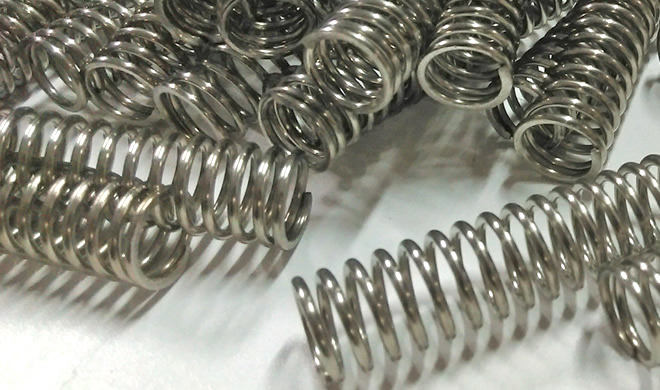
1. What Free Length and Working Height Mean
The free length of a compression spring is its natural length with no external force applied. The working height is the actual length once the spring is installed in the equipment and loaded with its working force. The difference between the two is the deflection (compression) produced in that working state.
So you cannot size a spring from the installation space alone. First establish how the spring behaves in the equipment: how much preload it must hold after seating, how far it must still compress under normal operation, and how far it may be compressed at maximum travel.
2. How to Determine Free Length
Free length is set jointly by the installation space, the preload, and the working stroke. If the spring must carry some preload once installed, its free length must exceed the working height in the installed state. The more it is compressed at installation, the greater the preload — but free length cannot grow without limit. An over-long spring tends to bow sideways and become unstable under compression, especially in slender compression springs. You must therefore check the slenderness ratio (length-to-diameter ratio) against the spring's outer diameter, material, active coils, and the available guiding.
Stability by slenderness ratio (free length ÷ outer diameter), guided vs. unguided:
| Slenderness ratio (L/D) | Guidance | Behavior |
|---|---|---|
| ≤ 3 | Any | Stable |
| 3–5 | Guided or unguided (acceptable) | Stable; unguided still acceptable |
| 5–8 | Guided recommended | Unguided tends to buckle |
| > 8 | Guided (rod/sleeve) required | Buckles if unguided |
When the ratio is high, add a guide rod or guide sleeve, or shorten the free length by changing other parameters rather than leaving the spring unsupported.
3. How to Determine Working Height
Working height follows from the actual load and the spring's stiffness (rate). Under load, the height changes with deflection. For a spring working within its linear range, the deflection from a given load is:
δ = F / k → Working height h = L_free − δ
where F is the applied load, k the spring rate (stiffness), and δ the deflection. From the free length, subtract the deflection to get the working height.
For example, if one spring must work at two different loads, calculate the working height for each, and confirm that the most-compressed state does not reach the solid height (coils touching).
4. Why You Should Not Compress to Solid Height
At the solid (closed) condition the coils are essentially in contact, and further compression makes the load rise sharply while generating high local stress. Design practice keeps a sensible margin between the maximum working deflection and the solid height. Otherwise the spring may repeatedly go solid at the equipment's limit travel, sharply cutting fatigue life — a critical point for mechanisms with frequent reciprocating motion.
A practical rule: keep the maximum working deflection below roughly 80–85 % of the available travel to solid, leaving margin for over-travel and fatigue.
5. What to Do When Installation Space Is Limited
If space is tight, do not simply cut the free length. Instead adjust the spring's wire diameter, outer diameter, active coil count, and material to change the rate and working range, and re-evaluate the preload and stroke. Where the compression stroke is large, also consider adding a guide rod or sleeve so the spring does not bow noticeably during compression.
Parameter-tuning options when space is constrained:
| If you need… | Adjust | Trade-off |
|---|---|---|
| Higher rate in same space | Larger wire diameter | Fewer/active coils; lower max deflection |
| Lower rate (softer) | Smaller wire or more coils | Taller stack; watch solid height |
| More travel in same height | Smaller wire, more active coils | Lower load capacity |
| Stability without guides | Lower L/D (shorter or larger D) | May need different envelope |
6. Purchasing Advice
When ordering compression springs, provide the installed height, maximum working height, working load (or load range), and required stroke — not just the free length. For batch purchases, also confirm the spring rate, solid height, and permissible working stress. Supplying only the free length leaves the supplier unable to guarantee the spring will perform in your assembly.
7. Common Misconceptions
1. "Free length equals the installation-space length." In fact the working height after installation is normally shorter than the free length; the difference is the deflection. Sizing from free length alone misses the loaded state.
2. "Size from the maximum load only." If the most-compressed state sits near the solid height, the spring may reach the design load yet fail early from chronic over-compression. Always check the minimum working height.
8. FAQ
Q: Is a longer free length always better? No. Free length must match the working stroke, the installation space, and spring stability; too long raises buckling risk.
Q: Is working height the same as installed height? Generally yes — it is the spring's actual height under a specific working load — but you must state which load state you mean.
Q: What is the relationship between free length and working height? Their difference equals the spring's deflection in that working state.
Q: Can a compression spring be compressed to solid? Not as a normal working condition. Keep the maximum working deflection with a margin below solid height.
Q: How do I choose a spring for a very small space? Adjust wire diameter, outer diameter, active coils, free length, and rate together, and use a guiding structure to settle the final size.
Copyright © 2016-2025 Forrun (Guangdong) Industrial Technology Co., Ltd All Rights Reserved.


