- Contact Us
- -
- Payment
- -
- 中文版
Knowledge Center · 2026-11-12 09:30:16 · 3 hits
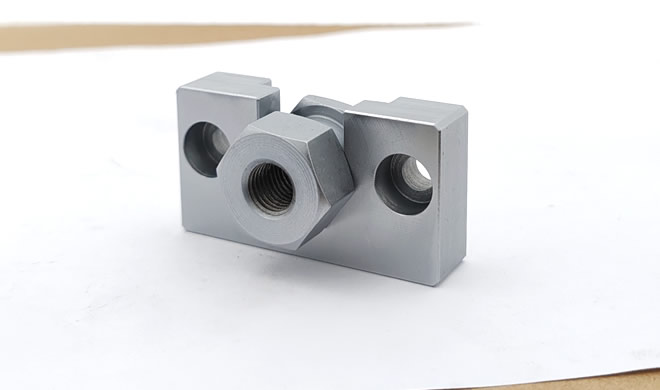
1. Definition and Function
1.1 What a floating joint is
A floating joint (also called a floating coupler or self-aligning joint) is the key component that connects a pneumatic cylinder's piston rod to the driven mechanism. Its primary function is to allow a defined range of angular misalignment and displacement compensation between the two.
1.2 What it does
Absorbs assembly error, raising system reliability.
Reduces the impact of shock loads on the equipment.
Adds compliance and adaptability to the whole drive chain.
Without it, any offset between the cylinder axis and the load axis is forced into the rod, the rod seal, and the guide — a common source of premature wear, bending, and seizure.
2. Types and Operating Principle
2.1 By structure
| Type | Characteristics | Best for |
|---|---|---|
| Spherical-joint type | Compact, high load capacity; compensates angular misalignment in any direction | General automation, limited space, high thrust |
| Universal-joint (cardan) type | Handles larger angular deflection; good wear resistance | Large swing angles, articulated linkages |
Spherical-joint type. Its compact build carries high loads and permits angular misalignment in any radial direction, making it the default choice for most cylinder-to-slide connections.
Universal-joint type. Suited to applications requiring larger deflection angles, with durable bearing surfaces for repeated articulation.
2.2 Operating principle
The joint uses an elastic element or a spherical pair to achieve self-alignment. When external force or misalignment appears, the joint automatically adjusts its relative position so the connection stays in the best contact condition. Only the axial thrust is transmitted; side loads and bending moments are largely relieved from the piston rod.
What it compensates — and what it does not:
| Error type | Compensated | Note |
|---|---|---|
| Angular misalignment (axis tilt) | Yes, within rated angle | Typically a few degrees, per model |
| Radial offset / eccentricity | Yes, within rated allowance | Varies by joint size |
| Axial thrust transmission | Yes (primary function) | Size to the cylinder thrust |
| Large continuous side load | No | A floating joint is not a linear guide |
3. Installation and Maintenance
3.1 Installation points
Select a size that matches the cylinder parameters (bore, rod thread, rated thrust).
Ensure the mounting surfaces are clean and free of burrs.
Tighten the fixing bolts to the manufacturer's recommended torque.
3.2 Maintenance
Inspect the joint periodically for wear and play.
Check the lubricant condition and replenish it in time.
Avoid overload operation, which damages the joint and defeats its compensation function.
Rigid connection vs. floating joint:
| Aspect | Rigid coupling | Floating joint |
|---|---|---|
| Assembly alignment | Must be near-perfect | Tolerates misalignment |
| Rod side load | High, causes seal wear | Greatly reduced |
| Shock / vibration | Transmitted to cylinder | Absorbed |
| Service life of cylinder | Shorter under misalignment | Extended |
| Cost / complexity | Lower | Slightly higher |
4. Application Cases
Packaging machinery. On packaging lines, a floating joint works with a cylinder to perform pick-and-place, resolving the positioning deviation caused by traditional rigid connections and markedly improving throughput and product quality.
Automotive manufacturing. Used in body-welding jigs and fixtures, it enables multi-degree-of-freedom precision control while effectively lowering the production-line failure rate.
5. Selection and Compensation Guidance
Determine the cylinder's maximum thrust and choose a joint whose rated load exceeds it with margin.
Confirm the rod-end thread and the joint's mounting interface.
Estimate the angular misalignment and radial offset in the assembly, then verify they fall within the joint's rated allowances.
Where the load itself needs guidance, add a linear guide — let the joint absorb the error, not carry the side load.
For high-cycle or shock duty, check the joint's lubrication interval and wear-life data.
6. FAQ
Q: Can a floating joint replace a linear guide?
No. It compensates small misalignment; the load path still needs its own guide to carry side forces.
Q: How much misalignment can it absorb?
Typically a few degrees of angular error plus a small radial offset, both model-dependent — check the rated allowances before specifying.
Q: Which type should I choose?
Spherical-joint type for compact, high-thrust, general-duty connections; universal-joint type when larger deflection angles are required.
Q: Why is my cylinder rod seal wearing out early?
A rigid connection under misalignment is the usual cause. Fitting a floating joint removes the side load from the rod.
Q: Does a floating joint need lubrication?
Yes — check grease condition periodically and replenish it to prevent wear and lost self-alignment.
Copyright © 2016-2025 Forrun (Guangdong) Industrial Technology Co., Ltd All Rights Reserved.


