- Contact Us
- -
- Payment
- -
- 中文版
Knowledge Center · 2026-08-12 09:12:15 · 163 hits
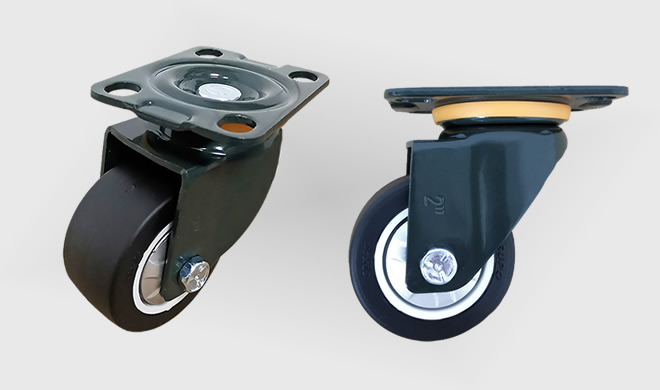
Casters are designed to deliver low‑resistance and stable rolling performance under normal operating conditions. Obvious rolling noise, frictional squeaks, impact clattering or periodic abnormal sounds indicate defects within the caster assembly or at ground contact interfaces. During operation, casters bear equipment dead‑weight, ground impact loads and lateral forces generated during steering. After prolonged service, issues such as wheel surface abrasion, bearing failure and loose mounting frequently occur. Without timely troubleshooting, excessive noise will escalate into higher rolling resistance, equipment wobble and even permanent structural damage to the casters.
Wheel wear or material incompatibility ranks among the leading contributors to raised noise levels.Subjected to continuous friction and impact against floor surfaces, caster wheels may suffer surface abrasion, deformation or local damage. These defects trigger periodic vibration and audible noise while rolling.Caster wheel materials are engineered for distinct working conditions. Hard‑material wheels support heavy payloads yet tend to produce loud noise on rigid floors. Soft‑material wheels achieve effective noise reduction, though users must balance noise performance against load‑bearing capacity and wear resistance.
Abnormal bearing condition is another frequent root cause.Internal bearings minimize rotational friction for casters. Insufficient lubrication, dust contamination or persistent overloading will induce abnormal friction between rolling elements and raceways. Typical symptoms include stiff rotation, growing noise and increased rolling resistance.
Loose mounting generates impact‑type noise.Untightened mounting bolts or insecure joints between mounting plates and equipment create clearances. Relative movement under impact during travel brings about rattling sounds. This phenomenon becomes far more noticeable during frequent steering or traversal over uneven floors.
Overloaded operation accelerates noise generation.When actual payload exceeds the rated load capacity, wheel deformation takes place and bearings endure abnormal stress, resulting in higher rolling resistance. Long‑term overloading further triggers uneven wheel wear, making caster operation progressively unstable.
Noise mitigation starts with identifying exact noise sources before implementing targeted countermeasures.If noise originates from worn wheels, replace casters with properly‑specified materials according to equipment weight, floor conditions and operation frequency. Select highly elastic wheel materials for noise‑sensitive working environments.For bearing‑related abnormal noise, inspect lubrication status and internal component integrity. Minor lubrication deficiency can be resolved via routine maintenance. Replace casters or bearing assemblies once bearings exhibit wear or seizure.For mounting‑related faults, inspect fastening bolts, mounting plates and swivel assemblies to guarantee rigid connection and eliminate impact caused by loose joints.
Floor conditions exert significant influence on noise output. Uneven ground, metal flooring or sites scattered with debris produce continuous impact excitation, amplifying vibration and noise. Match wheel material to floor properties for frequently moved equipment. Elastic wheels perform well on hard floors. For high‑temperature, oily or chemically aggressive surroundings, adopt caster materials with superior environmental resistance. In addition, dust and debris penetrating rotating sections will increase friction and gradually raise noise volume.
Load capacity should not be the sole consideration during caster selection. Practical selection requires comprehensive evaluation covering equipment weight, movement frequency, floor conditions, steering requirements and noise constraints.For manually propelled equipment, prioritize low rolling resistance and operating comfort. For automated machinery and AGV mobile systems, focus on running stability, wear resistance and long‑term service reliability. For noise‑sensitive applications, prioritize low‑noise wheel materials and verify bearing structure as well as load ratings satisfy working demands.
Many operators attribute loud caster noise exclusively to wheel material. In reality, bearing failure, loose installation and overload conditions can equally trigger abnormal noise.Furthermore, softer wheels cannot resolve all noise‑related problems. Excessive equipment weight will cause severe deformation of soft wheels and shorten service life conversely. Effective noise reduction requires holistic assessment of wheel material, bearing configuration, mounting scheme and field operating environment.
Q: Why do brand‑new installed casters produce loud noise immediately?
A: Possible triggers include improper wheel‑material selection, loose mounting or defective bearing components.
Q: What actions should be taken when casters grow noisy after a period of usage?
A: Inspect wheel surface wear, bearing lubrication, mounting tightness and verify whether the casters are running under overloaded conditions.
Q: Are soft casters always quieter than hard casters?
A: Soft materials generally deliver better vibration damping performance. Nevertheless, load capacity and site conditions must also be taken into account.
Q: What symptoms indicate damaged caster bearings?
A: Typical signs include inflexible rotation, abnormal noise and elevated pushing resistance.
Q: How to select low‑noise casters?
A: Choose suitable wheel materials and bearing structures based on equipment weight, floor characteristics and movement frequency.
Copyright © 2016-2025 Forrun (Guangdong) Industrial Technology Co., Ltd All Rights Reserved.


