- Contact Us
- -
- Payment
- -
- 中文版
Knowledge Center · 2026-10-23 09:49:50 · 10 hits
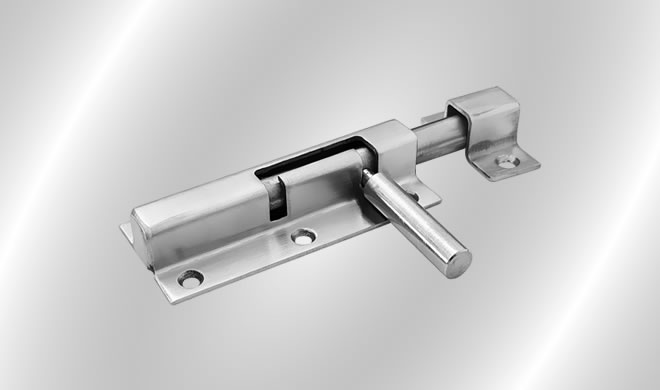
1. Fundamentals
① Definition. A Side Bolt is a simple device used to fix or connect two components. It is usually made of metal and offers a defined level of strength and durability.
② Basic construction.
| Component | Function |
|---|---|
| Pin body / shank | The main section inserted into the hole to form the connection |
| Head | At one end; provides grip for hand or tool installation / removal |
| Tail / end | Can be flat, round, or other forms to suit different applications |
2. Main Types of Side Bolt
① By material
| Material | Property | Typical use |
|---|---|---|
| Steel pin | High strength | Heavy-duty applications |
| Stainless steel pin | Excellent corrosion resistance | Outdoor or humid environments |
| Aluminum alloy pin | Lightweight with good strength | Aerospace, automotive, weight-sensitive uses |
② By shape
| Shape | Feature | Use |
|---|---|---|
| Straight pin | Simplest, most common | General locating / connection |
| Bent / curved pin | Angled to suit a specific layout | Improves stability in a defined direction |
| Threaded pin | One end threads into a preset hole | Increases connection firmness |
③ Special-purpose Side Bolts
| Type | Mechanism | Benefit |
|---|---|---|
| Quick-release pin | Spring-loaded detent | Fast unlocking and removal |
| Safety locking pin | Integrated locking mechanism | Stays secure even under vibration |
3. Application Scenarios
| Sector | Role of the pin |
|---|---|
| Machinery | Temporary locating point during assembly; permanent connection (e.g., machine bed to worktable) |
| Furniture | Fixing moving parts such as door panels and drawers; extra safety against accidental opening |
| Construction | Structural reinforcement (bridges, high-rise buildings); auxiliary fixing for doors and windows |
4. Selection and Installation Guide
① Selection basis.
Operating environment: consider temperature range, humidity, and corrosion exposure.
Load requirement: choose the specification per the expected load.
Material compatibility: ensure good chemical compatibility with the connected material.
② Installation steps.
Preparation — verify all components are present and confirm the correct mounting position.
Hole preparation — drill/bore precisely to the pin's dimensions.
Installation — carefully insert the pin and ensure it is fully seated.
Final inspection — confirm the pin is secure before putting the assembly into service.
③ Maintenance.
Regular inspection — watch for looseness and correct it promptly.
Cleaning — prevent dust buildup that could impair operation.
Replace worn parts — replace any damaged component immediately to maintain safety.
Selection & installation checklist:
Environment (temp / humidity / corrosion) assessed
Load rating matched to duty
Material compatibility confirmed
Holes bored to pin dimension, both sides aligned
Pin fully seated; lock/release function verified
Periodic inspection and cleaning scheduled
5. Summary
Pins are among the simplest yet most versatile fastening elements in FA and mechanical systems. Correct material, shape, and type selection — paired with precise holes and a verification step — delivers reliable locating and connection across machinery, furniture, and structural applications.
Copyright © 2016-2025 Forrun (Guangdong) Industrial Technology Co., Ltd All Rights Reserved.


