- Contact Us
- -
- Payment
- -
- 中文版
Knowledge Center · 2026-08-06 10:57:18 · 221 hits
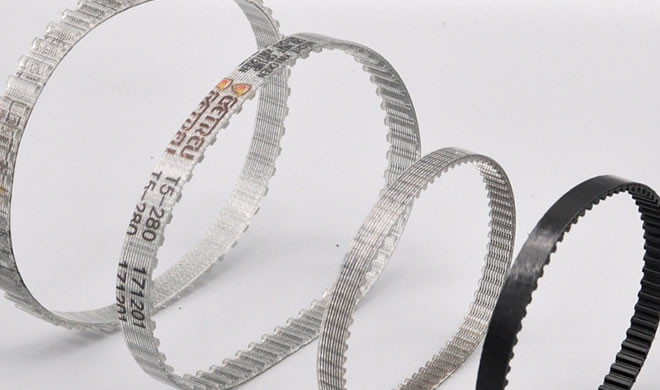
What is Timing Belt Tooth‑Skipping
Timing‑belt tooth‑skipping (tooth jump) refers to an abnormal condition where belt teeth fail to maintain proper meshing engagement with the tooth grooves of timing pulleys. Tooth‑flank slippage occurs, causing relative positional offset between the timing belt and pulleys.
Since timing belts transmit motion and torque through positive tooth meshing, tooth‑skipping will alter the actual transmission ratio. This results in equipment position deviation, degraded repeat positioning accuracy and other malfunctions.
In FA automation machinery, tooth‑skipping frequently takes place during start‑up, acceleration, emergency stop or abrupt load variation. These operating conditions generate high instantaneous tensile force, subjecting the timing belt to loads exceeding its normal allowable working range.
Root Causes of Tooth‑Skipping
Insufficient timing‑belt pre‑tension is one of the most common triggers for tooth‑skipping. If pre‑load after installation is too low, the belt body will produce substantial elongation under fluctuating working loads during operation. Consequently, belt teeth cannot stay fully engaged with pulley grooves, and tooth‑skipping will occur after long‑term running.
Excessive applied load or inertial shock further raises the risk of tooth jump. Large inertial force is generated by moving components during equipment start‑stop cycles. When the timing belt’s load‑carrying capacity is inadequate, transient tensile force may surpass the tooth‑meshing shear limit.
Mismatch between timing pulley and timing belt also contributes to failure modes. Examples include incompatible tooth profiles, insufficient machining precision of pulleys, or worn pulley teeth. These defects create abnormal meshing status and make the belt prone to disengaging from correct transmission positions.
Additionally, poor mounting parallelism, belt tracking deviation and long‑term cumulative wear will bring about uneven partial stress distribution, leading to premature damage on local tooth flanks.
Troubleshooting & Solutions
To resolve timing‑belt tooth‑skipping, first inspect and verify whether belt tension is set within the reasonable working range. During installation, adjust pre‑tension strictly in accordance with belt specifications and equipment requirements. Avoid under‑tension which causes insufficient meshing, as well as over‑tension which imposes extra burden on bearings and shortens belt service life.
For machinery with frequent start‑stop cycles, high‑speed operation or impact loads, re‑evaluate timing‑belt specifications including belt width, tooth profile, power transmission capacity and safety factor. Prevent continuous operation near the belt’s performance limit.
Meanwhile, inspect timing pulley conditions: confirm tooth‑profile compatibility, check for pulley tooth wear, and observe whether lateral belt drift exists while running.
For equipment demanding high positioning accuracy, verify assembly precision such as axis‑to‑axis parallelism of two pulleys, center‑to‑center distance and fastening condition of mounting assemblies.
Procurement Recommendations
When selecting timing belts, do not make decisions merely based on belt length and total tooth count. Comprehensive evaluation shall cover equipment load, operating speed, start‑stop frequency, acceleration magnitude and ambient working conditions.
For high‑speed reciprocating machinery or devices with frequent start‑stop actions, prioritize timing‑belt grades featuring superior load‑bearing capability and excellent fatigue resistance.
Timing pulleys must be fully compatible with mating belts in tooth profile, pitch and machining accuracy. Even if mis‑matched assemblies can be mechanically fitted, long‑term running stability will be compromised.
For precision positioning equipment, pay close attention to belt elongation rate and transmission rigidity. Excessive elastic elongation will directly impair machine repeat‑positioning performance.
Common Risks & Misconceptions
Many end‑users attribute tooth‑skipping exclusively to loose timing belts. In real‑world applications, however, load shock, pulley wear and mounting misalignment are equally frequent root causes.
Another misconception: higher belt tension can completely eliminate tooth‑skipping. Excessive pre‑tension accelerates belt tensile fatigue, increases bearing load and system motion resistance, and shortens overall drive‑train service life instead.
It is also widely assumed that widening the timing belt will definitely solve tooth‑jump issues. If the fundamental problem originates from assembly misalignment or defective pulleys, simply increasing belt size cannot eliminate the failure source.
FAQ
Will timing‑belt tooth‑skipping affect equipment accuracy?
Yes. Tooth‑skipping breaks the synchronized transmission relationship between belt and pulleys, resulting in position offset and increased repeat‑positioning error.
How often should timing belts be replaced?
There is no universal fixed replacement interval. Service life assessment depends on operating frequency, applied load and visual wear status. Conduct thorough inspection when tooth‑flank abrasion, cracks or recurrent tooth‑skipping are observed.
Are wider timing belts less susceptible to tooth‑skipping?
Not necessarily. Belt width must match actual applied load. Blindly over‑specifying belt dimensions raises material cost without resolving assembly or application‑related defects.
Why is tooth‑skipping more likely upon equipment start‑up?
High motor output torque and component inertial load are generated instantaneously at start‑up, producing sharp impact force and triggering meshing failure of timing belts.
Is periodic tension adjustment required for timing belts?
Yes. Timing belts may develop permanent fatigue elongation after prolonged operation. Check belt tension status regularly according to actual machine performance.
Copyright © 2016-2025 Forrun (Guangdong) Industrial Technology Co., Ltd All Rights Reserved.


