- Contact Us
- -
- Payment
- -
- 中文版
Knowledge Center · 2026-08-27 09:50:46 · 214 hits
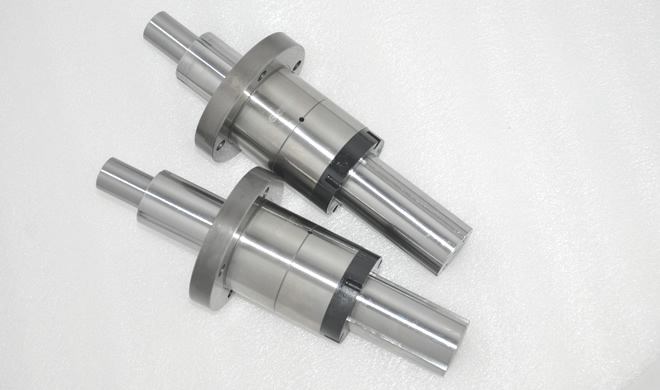
Ball splines are high‑precision transmission components widely adopted in material‑handling mechanisms and positioning systems. They deliver torque transmission while enabling linear reciprocal motion. After prolonged operation, issues such as increased internal clearance, positioning drift, abnormal noise and vibration frequently occur, mainly triggered by wear, impact loading and lubrication degradation. This article analyzes root causes of looseness from wear mechanism, failure triggers and system‑level performance impacts, and proposes tiered troubleshooting solutions covering cleaning‑lubrication, installation verification and component replacement. It helps field engineers evaluate fault severity and apply targeted maintenance procedures to restore equipment positioning accuracy.
Motion transmission of ball splines relies on precise rolling contact of steel balls between the spline shaft and spline nut. Under long‑duration, high‑frequency reciprocating cycles, micro‑scale wear takes place on contact surfaces of rolling balls and raceways. As wear accumulates, the original clearance controlled at the 0.01 mm level may expand to 0.05 mm or even larger. Obvious mechanical play emerges during movement, and repeat positioning accuracy of reciprocating positioning units degrades from ±0.02 mm to worse than ±0.1 mm.
Three primary factors accelerate wear progression: repeated impact loads induce micro‑cracks on steel balls and raceway surfaces; misaligned installation generates uneven stress distribution and accelerates localized material removal; dried‑out or depleted grease leads to direct metal‑to‑metal contact and adhesive wear.
Increased internal clearance permits tiny displacement of rolling elements within raceways. Collisions between steel balls and raceway walls produce characteristic clicking noise, and the resulting impact force further accelerates surface wear.
Looseness inside positioning assemblies causes offset gripping positions for workpieces. On automated production lines, this may result in incorrect assembly or missed inspection events. Amplified vibration propagates through mounting bases to adjacent equipment, undermining overall machine stability. The major hazard of ball‑spline looseness is not limited to individual‑component failure; it triggers systematic degradation across positioning accuracy, noise performance and operational reliability of the whole mechanism.
For minor looseness, performance recovery via maintenance is feasible. Dismantle the spline assembly, clean steel balls and raceways with suitable solvent, and inspect surfaces for pitting corrosion. Refill with specified grade of grease before reassembly. Use a dial indicator to verify coaxiality error between spline shaft and driving shaft; ensure the reading stays below 0.03 mm.
Once distinct wear marks appear on raceways or steel‑ball diameter reduction exceeds 0.02 mm, replacement of the spline nut or the complete ball‑spline unit becomes mandatory. Simply replacing individual rolling balls cannot eliminate inherent raceway damage. During replacement, recalculate actual applied loads to confirm adequate safety margin for the selected model. Meanwhile inspect flatness and perpendicularity of mounting seats.
In short, remediation measures shall be determined according to wear severity. Surface‑level oxidation and contamination can be eliminated through thorough cleaning, whereas substrate deformation or raceway fatigue damage requires full‑component replacement.
Copyright © 2016-2025 Forrun (Guangdong) Industrial Technology Co., Ltd All Rights Reserved.


